
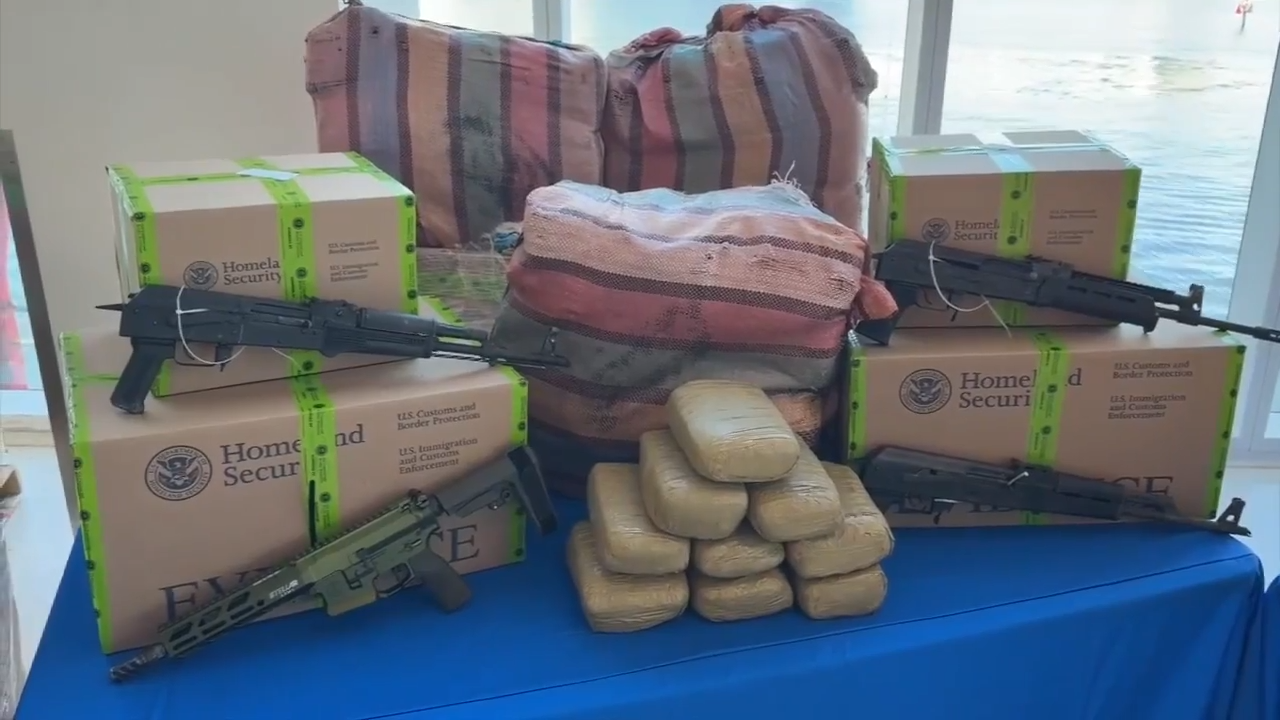
U.S. Customs and Border Protection put on a department demonstration of how they’ve ramped up security around Florida.
Border Patrol’s top officers, including border czar Tom Homan, were at Port Miami Thursday morning to underscore the success that they have had with border protection efforts in the last fiscal year.
They held a demonstration to showcase how dangerous some situations can be.
A big priority of theirs, they said, was focusing their resources in Florida to interdict more drug and gun traffickers.
On the waters, they have dealt with dangerous situations with drug traffickers, with cartels, which sometimes end in gunfire, officials said.
U.S. Customs and Border Protection Commissioner Rodney Scott said that by securing the southwest border, the numbers of crossings there has decreased, and since those numbers have decreased, they have been able to spread resources to other areas, including around Florida.
The commissioner made it clear that they view Florida as a border state, so with the luxury of more manpower, they’ve shifting that focus to add more maritime patrols in the area.
“I remind people that a short 12-mile section where we were proving out these concepts in San Diego allowed us to free up 150 agents every 24 hours,” said Scott. “We have more aircraft flying down here, we have more boats, and we have more Border Patrol agents patrolling.”
This comes as cartels have become more advanced with technology and drones, officials said.
CBP said federal law enforcement agencies have stepped up, as nearly 1 million pounds of narcotics have been seized this year.
And the belief, officials said, is not that it’s just because more drugs are being smuggled, but it’s actually because there’s more interdictions that are happening, and they said their internal numbers show that increase in traffic.
“CBP has seized 67 percent more drugs in fiscal year 2026 than in fiscal year 2024. Every pound of smuggled drugs that we seize does not reach an American community,” said Scott. “In fiscal year 2026, CBP agents in Miami seized more than 17,000 pounds of narcotics compared to just 7,000 pounds before and that’s not an accident; that’s a result of more capacity, more flight hours, more float hours and enhanced cooperation and coordination with all of our partners.”
Officials said they will continue to ramp up their efforts in South Florida.
Border czar Tom Homan said that he’s been down to Miami several times over the past few months, and asked local officials what resources are in highest need and what federal authorities can provide to make sure that this continues to impact the communities and to make sure they continue to have these interdictions on the water.


